
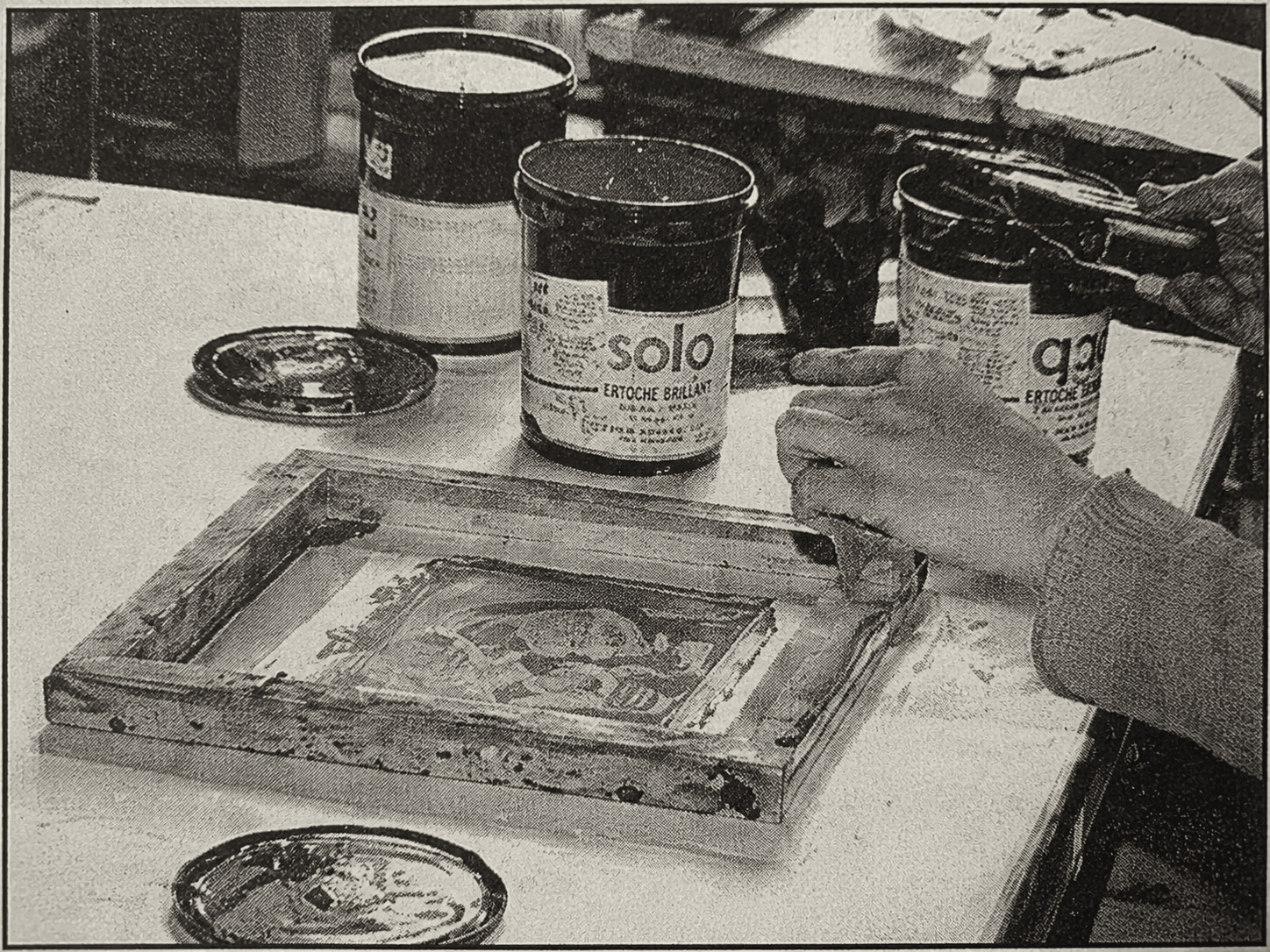
Screen printing, also known as silk screen printing or serigraphy, is a printing technique based on the stencil reproduction method. In this process, a mesh fabric (traditionally silk) is used as a supporting surface for the stencil. The stencil is attached to the mesh, which is tightly stretched over a frame. Thick printing ink is spread across the stencil using a blade-like tool called a squeegee, forcing the ink through the open areas of the mesh onto the substrate positioned beneath the frame. This technique allows designs to be printed in various colors on both flat and curved surfaces. Images produced through screen printing often feature sharp, well-defined edges, resembling cut-and-pasted colored paper. Artists have used this distinctive characteristic to create unique and innovative works.
Today, screen printing is widely used not only for artistic applications but also in industrial printing, printing on glass, metal, plastic, wood, PVC, acrylic, textiles, labels, and promotional products. One of the key advantages of this method is its ability to deposit a relatively thick layer of ink, resulting in strong, opaque color coverage, particularly when printing white and metallic inks.
The type of ink used in screen printing must be selected according to the characteristics of the printing substrate. Today, water-based, solvent-based, UV, and various specialty inks are used for different applications. In modern printing systems, LED exposure equipment, UV curing systems, and automatic screen printing machines have significantly improved production speed, precision, and process repeatability.
Other advantages of screen printing include high flexibility in substrate selection, the ability to print specialty inks, and the creation of raised and textured effects. For these reasons, screen printing continues to play an important role in the advertising, industrial, and packaging sectors.